This post contains affiliate links. We may earn a small commission if you purchase through them, at no extra cost to you.
1. Are Blueberries Safe for Dogs?
Video credit: Dotsure Limited channel via YouTube.
Blueberries are completely safe for dogs to eat. They are non-toxic, soft, and small enough to be given as a treat for almost any breed. The American Kennel Club (AKC) lists blueberries as one of the best fruit treats for dogs, and veterinarians widely recommend them as a healthy, low-calorie snack option.
Unlike many other human foods that come with complicated warnings, blueberries tick nearly every box for what a good dog treat should look like:
Low in calories (about 57 Kcal per 100 grams ) Low in sugar compared to many other fruits Soft and easy to chew — very low choking risk for most dogs No pits, seeds, or skins that need removing No toxic compounds at normal treat quantities That said, “safe” does not mean “unlimited.” Even healthy food can cause problems when given in large amounts. More on the right portions in a moment.
Can My Dog Eat Blueberries If They Have Health Conditions? Most dogs can eat blueberries without any issues. But if your dog has diabetes , you should check with your vet first. Blueberries contain natural sugars that can affect blood glucose levels. Dogs with kidney disease or food sensitivities should also be introduced to any new food slowly and only with veterinary guidance.
For healthy dogs, blueberries are one of the safest fruits you can offer.
Are Blueberries Safe for All Breeds? Yes, blueberries are safe for all breeds, from tiny Chihuahuas to large Labrador Retrievers. The main thing that changes between breeds is the serving size, which we will cover in detail in the next section. Very small breeds and dogs that eat too fast should have their blueberries cut in half or mashed to reduce the small but possible choking risk.
2. What Makes Blueberries Healthy for Dogs — The Science These small berries are rich in vitamins and can be a healthy treat for dogs in moderation. Blueberries are one of the most nutrient-dense fruits you can give your dog. They are often called a “superfood” because they pack a remarkable amount of beneficial compounds into a very small, low-calorie package .
The Nutritional Profile of Blueberries According to the USDA , 100 grams of fresh blueberries contain:
Nutrient
Amount per 100g
Calories
57 kcal
Carbohydrates
14.5 g
Natural sugar
10 g
Dietary fibre
2.4 g
Vitamin C
9.7 mg
Vitamin K
19.3 mcg
Vitamin A
54 IU
Manganese
0.34 mg
Potassium
77 mg
Antioxidants (anthocyanins)
High — deep blue colour is the signal
Antioxidants: The Biggest Benefit From brain support to immune health, blueberries offer several benefits for dogs The most talked-about benefit of blueberries is their antioxidant content, specifically a group of compounds called anthocyanins . These are the pigments that give blueberries their deep blue-purple colour, and they are remarkably powerful at neutralising free radicals in the body.
Free radicals are unstable molecules that damage cells over time. In dogs, this damage contributes to ageing, inflammation, and the development of certain diseases, including cancer. Antioxidants slow this process down.
A 2006 study published by researchers at the University of Alaska Fairbanks tested sled dogs and found that adding blueberries to their diet significantly increased the antioxidant capacity of their blood after intense exercise. The dogs who ate blueberries also showed lower levels of creatine kinase, an enzyme that rises when the body is under physical stress.
Brain Health and Cognitive Support for Older Dogs One of the lesser-known benefits of blueberries is their potential to support brain health in ageing dogs. As dogs get older, cognitive decline is common — this is called Canine Cognitive Dysfunction (CCD) . Research has shown that antioxidants found in blueberries can help protect brain cells from oxidative damage .
Heart Health and Circulation Blueberries contain compounds that support healthy circulation and cardiovascular function . The fibre in blueberries helps maintain healthy cholesterol levels, and the antioxidants help reduce inflammation in blood vessels.
Digestive Health The dietary fibre in blueberries (around 2.4 grams per 100 grams ) supports a healthy gut. Fibre feeds the beneficial bacteria in your dog’s digestive system , supports regular bowel movements, and helps prevent both constipation and loose stools.
Immune System Support Vitamin C in blueberries plays a role in immune function . While dogs can produce their own vitamin C, additional dietary vitamin C from blueberries can still provide a beneficial boost, particularly for dogs under stress or recovering from illness.
Joint Health Blueberries contain compounds including pterostilbene and resveratrol that have documented anti-inflammatory properties. Chronic low-grade inflammation is a driver of joint problems like arthritis , which is extremely common in older and larger-breed dogs. Therefore, blueberries are a recommended food for dogs having this problem.
3. How Many Blueberries Can a Dog Eat Per Day? The golden rule for any dog treat is the 10% rule : treats should make up no more than 10% of your dog’s total daily calorie intake. For blueberries, this is easy to calculate because they are so low in calories. Each blueberry contains roughly 1 calorie .
Here is a practical serving size guide based on your dog’s weight:
Dog Size
Weight Range
Daily Calories (approx.)
Max Blueberries Per Day
Extra Small
Under 5 kg
200-350 kcal
Small
5 to 10 kg
350-500 kcal
Medium
10 to 25 kg
500-900 kcal
Large
25 to 40 kg
900-1,400 kcal
Extra Large
Over 40 kg
1,400+ kcal
How Many Blueberries Can A Dog Eat Based On The Exact Size The table above gives a general guide by size category. But every dog is different, use our free calculator below to get the exact amount for your dog’s precise weight, including separate results for fresh, frozen, and dried blueberries:
🥘 Blueberry Serving Size Calculator for Dogs Get the exact safe amount of fresh, frozen, and dried blueberries based on your dog’s weight
Dog’s health condition (optional)
Healthy adult dog Senior dog (7+ years) Overweight dog Diabetic dog Dog with kidney disease Dog with joint problems / arthritis Dog with food sensitivities Dog recovering from illness Puppy (8 weeks to 12 months)
Calculate Safe Blueberry Amount
📈 Calorie breakdown
—
📅 Recommended frequency
—
🧠 Senior dog brain health tip
—
⚠️
🛑
Safe feeding reminders ✓ Always wash blueberries under cool running water before serving
✓ Cut in half or mash for very small dogs and fast eaters
✓ Frozen blueberries are safe but let them thaw slightly for small breeds
✓ Never give blueberry muffins, jam, juice, or sweetened products
✓ Dried blueberries have concentrated sugar — always check for added sugar on the label
✓ Stop immediately if vomiting, diarrhea, or itching occurs
This calculator is a general guide only. Always consult your veterinarian for personalised advice.
How Much Is Too Many? If your dog eats a large amount of blueberries in one sitting — say, half a punnet or more, they are likely to experience some digestive upset. This usually resolves within 24 hours, but you should reduce the portion and reintroduce more slowly in the future.
4. How to Feed Blueberries to Your Dog the Right Way rinse Before Serving Wash thoroughly. Blueberries can carry traces of pesticides, dirt, or bacteria on the skin. Rinse well under cool running water before serving.
cut Based on Your Dog’s Size Check the size. For very small dogs (under 5 kg) or dogs that bolt their food, cut blueberries in half or mash them lightly to reduce choking risk.
start with the safest amount Start small. The first time you give your dog blueberries, offer just 1 to 2 berries and wait 24 hours. Watch for any signs of allergic reaction.
serve Serve plain. No sugar, no syrup, no honey, no other sweeteners — just the berry.
feed in moderation Stay within the serving size for your dog’s weight (see the table above).
6 Ways to Serve Blueberries to Your Dog Fresh — Simply wash and serve. The easiest option and the best for preserving all the nutrients. Frozen — A brilliant summer treat. Crunchy, refreshing, and most dogs love them. Let them thaw slightly for small breeds. Mashed or pureed — Great for fussy eaters or spread on a lick mat. Mixed with plain yoghurt — A nutrient-rich topping for their bowl (ensure it is xylitol-free). Prefer store-bought? This blueberry yoghurt dog treat uses real yoghurt and blueberries with no added sugar. Frozen blueberry treats — Mix with plain yoghurt and mashed banana, pour into an ice cube tray and freeze. As a training reward — Small, low-calorie, and most dogs find them genuinely rewarding. If you want a convenient and ready-made option, blueberry dog treats Can Dogs Eat Dried Blueberries? Dried blueberries are not toxic to dogs, but they are not the best choice either. The drying process concentrates the natural sugars significantly. If you do give dried blueberries, offer just one or two at most and check the label for added sugar.
Can Dogs Eat Frozen Blueberries? Yes, frozen blueberries are completely safe and most dogs love the crunchy texture. The freezing process does not destroy the anthocyanins or vitamins . For small dogs and toy breeds, let them thaw for 5 minutes or slice in half before serving to reduce any choking risk.
5. Can Dogs Eat Blueberry Muffins and Other Products? Avoid feeding blueberry muffins to dogs due to sugar and harmful ingredients. No, dogs should not eat blueberry muffins . The blueberries are not the problem, but everything else in the recipe is.
Why Blueberry Muffins Are Dangerous for Dogs A standard blueberry muffin contains:
High sugar content — far above what a dog’s digestive system handles well Refined white flour — a fast-digesting carbohydrate with no benefit for dogs Butter or vegetable oil — high-fat content that can trigger pancreatitis Vanilla extract — contains alcohol, which is toxic to dogs. Check our complete guide to know how to make dog-safe blueberry muffins. Can Dogs Have Blueberry Yoghurt, Jam, or Juice? Product
Safe?
Reason
Blueberry yoghurt (flavoured)
No
Added sugar and possible sweeteners
Plain yoghurt + blueberries
Yes (small amounts)
Fine if xylitol-free and the dog is not lactose intolerant
Blueberry jam
No
Almost entirely sugar
Blueberry juice
No
No fibre, concentrated sugar
Commercial blueberry dog treats
Check label
Look for no xylitol or artificial additives
Best Blueberry Yoghurt Dog Treat If you’d rather skip the mixing and prep, a ready-made blueberry yoghurt dog treat
6. Can Dogs Eat Strawberries and Blueberries Together? Yes, dogs can safely eat both strawberries and blueberries, and feeding them together is perfectly fine. Both fruits are non-toxic and offer overlapping nutritional benefits.
Feature
Blueberries
Strawberries
Safe for dogs
Yes
Yes
Calories per 100g
57 kcal
32 kcal
Sugar per 100g
10 g
4.9 g
Fibre per 100g
2.4 g
2 g
Vitamin C
9.7 mg
58.8 mg
Key antioxidant
Anthocyanins
Ellagic acid
Preparation needed
Wash only
Wash + remove stem and leaves
Best for
Antioxidants, brain health
Vitamin C, immune support
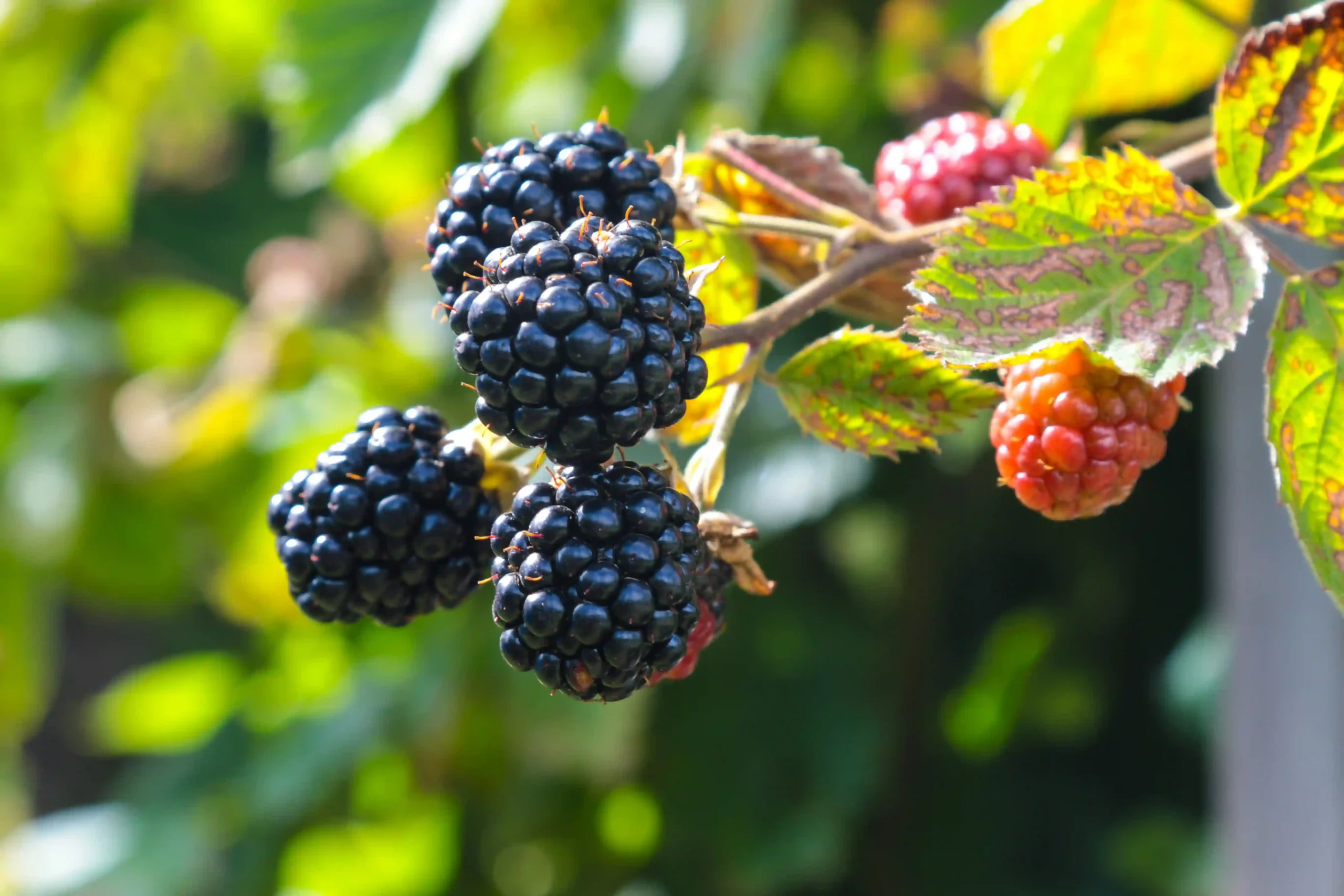
Can Dogs Eat Blackberries as Well? Yes. Dogs can also eat blackberries safely. They are low in calories, high in antioxidants, and contain vitamins C and K. They do contain small naturally occurring amounts of xylitol, but the quantities in fresh whole blackberries are far too low to cause any harm.
7. What Berries Are Toxic for Dogs? Not all berries are safe for dogs. This is an important topic because dogs who spend time outdoors can encounter wild berries that look appealing but are genuinely dangerous.
Berries That Are Safe for Dogs Blueberries Strawberries Raspberries Blackberries Cranberries (in small amounts — very tart) Goji berries (dried should be soaked first; safe in small amounts) Berries That Are Toxic or Dangerous for DogsBerry
Risk Level
What It Causes
Grapes and raisins
EXTREMELY HIGH
Acute kidney failure, even tiny amounts can be fatal
Holly berries
High
Vomiting, diarrhoea, lethargy, excessive drooling
Mistletoe berries
High
Cardiovascular problems, severe gastrointestinal distress
Nightshade berries
High
Neurological symptoms, seizures, death in large quantities
Juniper berries
Moderate-High
Kidney irritation, vomiting, abdominal pain
Pokeweed berries
High
Vomiting, respiratory distress, potentially fatal
Gooseberries
Moderate
Can cause digestive upset and are mildly toxic in large amounts
Bittersweet berries
High
Gastrointestinal and neurological symptoms
What to Do If Your Dog Eats a Toxic Berry Stay calm and remove access to any remaining berries Note the estimated quantity eaten and the time Do not induce vomiting unless specifically instructed to do so by a vet Contact your vet immediately or call the ASPCA Animal Poison Control Center: 888-426-4435 If possible, take a photo or sample of the berry to help with identification 8. What Fruit Can Dogs Eat? A Quick Safe-Fruit Guide Many fruits are safe for dogs, but preparation matters – seeds, pits, and rinds are often the dangerous parts, even when the flesh itself is fine.
Fruit
Safe for Dogs?
Notes
Blueberries
Yes
One of the best options is to wash and serve
Strawberries
Yes
Remove stem and leaves
Raspberries
Yes
Fine in small amounts
Blackberries
Yes
Small amounts; fine as an occasional treat
Watermelon
Yes
Remove seeds and rind completely
Apple
Yes
Remove seeds and core, seeds contain cyanide compounds
Banana
Yes
High in sugar, small amounts only
Mango
Yes
Remove pit and peel; offer flesh only
Pineapple
Yes
Remove skin and core; offer small pieces of flesh
Cranberries
Yes
Very tart, small amounts only
Oranges
Yes (cautiously)
High citric acid; small amounts only
Peaches
Yes
Remove the pit, it contains cyanide
Pears
Yes
Remove seeds and core
Grapes and raisins
NEVER
Highly toxic- kidney failure
Cherries
No
Pits, leaves, and stems contain cyanide
Avocado
No
Persin causes vomiting and diarrhoea
Lemons and limes
No
High citric acid causes severe digestive distress
The table above covers the most common fruits, but it is only part of the picture. For a complete A to Z list of every safe and toxic fruit with detailed preparation instructions, our guide on what fruit can dogs eat safely covers everything in one place.
9. Risks and Side Effects to Know About Possible risks and side effects of feeding blueberries to dogs Blueberries are one of the safest fruits you can give your dog , but a few genuine risks are worth knowing.
Digestive Upset from Eating Too Many The most common issue is simple: too many blueberries at once can cause diarrhoea or loose stools. This usually resolves within 24 to 48 hours without intervention.
Choking Risk for Small Dogs While blueberries are small, they can still be a choking hazard for very small dogs (particularly toy breeds under 3 kg) or dogs that eat very fast. Cutting or mashing blueberries removes this risk entirely.
Allergic Reactions Fruit allergies in dogs are uncommon but not impossible. Signs of an allergic reaction include:
Itching or scratching, especially around the face, ears, and paws Swelling around the mouth, face, or eyes Hives or skin redness Vomiting or diarrhoea shortly after eating If your dog shows any of these signs after eating blueberries, stop feeding them and contact your vet.
Blood Sugar Impact for Diabetic Dogs For diabetic dogs, any new food that contains natural sugars should only be introduced with your vet’s approval and guidance.
Pesticide Residue Always wash blueberries before serving them to your dog to remove any surface residue.
10. Blueberries for Puppies and Senior Dogs Can Puppies Eat Blueberries? Yes, puppies can eat blueberries once they have transitioned to solid food , usually from around 8 to 10 weeks of age. Their developing bodies can benefit from the antioxidants and vitamins in blueberries. However, puppies have more sensitive digestive systems, so start with just one small berry.
Mashing blueberries is particularly recommended for young puppies, as the softer texture is easier to manage and reduces any choking risk.
Can Senior Dogs Eat Blueberries? Blueberries are actually one of the best fruits for senior dogs , and arguably more beneficial than for younger ones.
Older dogs are more vulnerable to:
Oxidative stress that accelerates cellular ageing Cognitive decline (Canine Cognitive Dysfunction) Joint inflammation and arthritis Weakened immune function Heart and circulation issues Every one of these areas is positively supported by the compounds in blueberries. For a senior dog, 5 to 10 blueberries a few times per week is a genuinely valuable dietary addition.
11. Frequently Asked Questions
How much blueberries can I give my dog? Treats should make up no more than 10% of your dog’s daily calories. In practice: 2 to 3 blueberries for small dogs (under 10 kg), 5 to 6 for medium dogs (10 to 25 kg), and 8 to 10 for large dogs (over 25 kg). Always start with 1 to 2 berries the first time and watch for any reaction.
What fruit can dogs eat? Dogs can safely eat blueberries, strawberries, raspberries, blackberries, watermelon (no seeds or rind), apple (no seeds), banana, mango (no pit), pineapple, cranberries, and peaches (no pit). Never feed dogs grapes, raisins, cherries, or avocado.
What makes blueberries healthy for dogs? Blueberries are packed with antioxidants- especially anthocyanins, which neutralise free radicals that damage cells over time. They also provide vitamin C for immune support, vitamin K for bone health, dietary fibre for digestion, and manganese for energy metabolism.
What berries are toxic for dogs? Holly berries, mistletoe berries, nightshade berries, juniper berries, pokeweed berries, and bittersweet berries are all toxic to dogs. Grapes and raisins are the most dangerous, capable of causing kidney failure even in small amounts.
Which fruit is not good for dogs? Grapes and raisins should never be given to dogs under any circumstances. Avocado, cherries (pits, leaves, and stems contain cyanide), lemons, limes, and grapefruit should also be avoided.
Can dogs eat blueberry muffins? No. The sugar, butter, refined flour, and potentially xylitol in muffins make them unsafe for dogs. Stick to fresh, plain blueberries only.
Is citric acid bad for dogs? Yes, in large amounts, citric acid causes vomiting, diarrhoea, and in very high doses, neurological effects. This is why lemons and limes should be avoided. The trace amounts in blueberries are far too small to cause any concern.
12. Conclusion So, can dogs eat blueberries? Absolutely yes, and with good reason. These small berries offer real, research-backed benefits for dogs of all ages: antioxidant protection, brain health support, digestive fibre, immune-boosting vitamin C, and anti-inflammatory compounds.
Three key takeaways to remember:
Serve fresh, washed, and plain — no muffins, no jam, no juice, no added sweeteners Keep portions within the 10% rule — 2 to 3 berries for small dogs, up to 8 to 10 for large dogs Start slow — introduce blueberries one at a time the first time, and watch for any reaction If you want to add variety to your dog’s fruit treats, you can also give strawberries, blackberries, and raspberries safely, or combine them all in a homemade frozen treat your dog will genuinely love.
This article is for informational purposes only and does not replace professional veterinary advice. If your dog has a health condition or you are unsure about introducing new foods, always consult your veterinarian first.
Muhammad Saad writes about pet nutrition and safety at Petscriz, researching each topic against peer-reviewed and veterinary sources. Firsthand animal care experience includes freshwater fish, rabbits, cats, parrots, and chicks; dog-related content is compiled from cited research rather than personal ownership, and is flagged accordingly throughout the site.