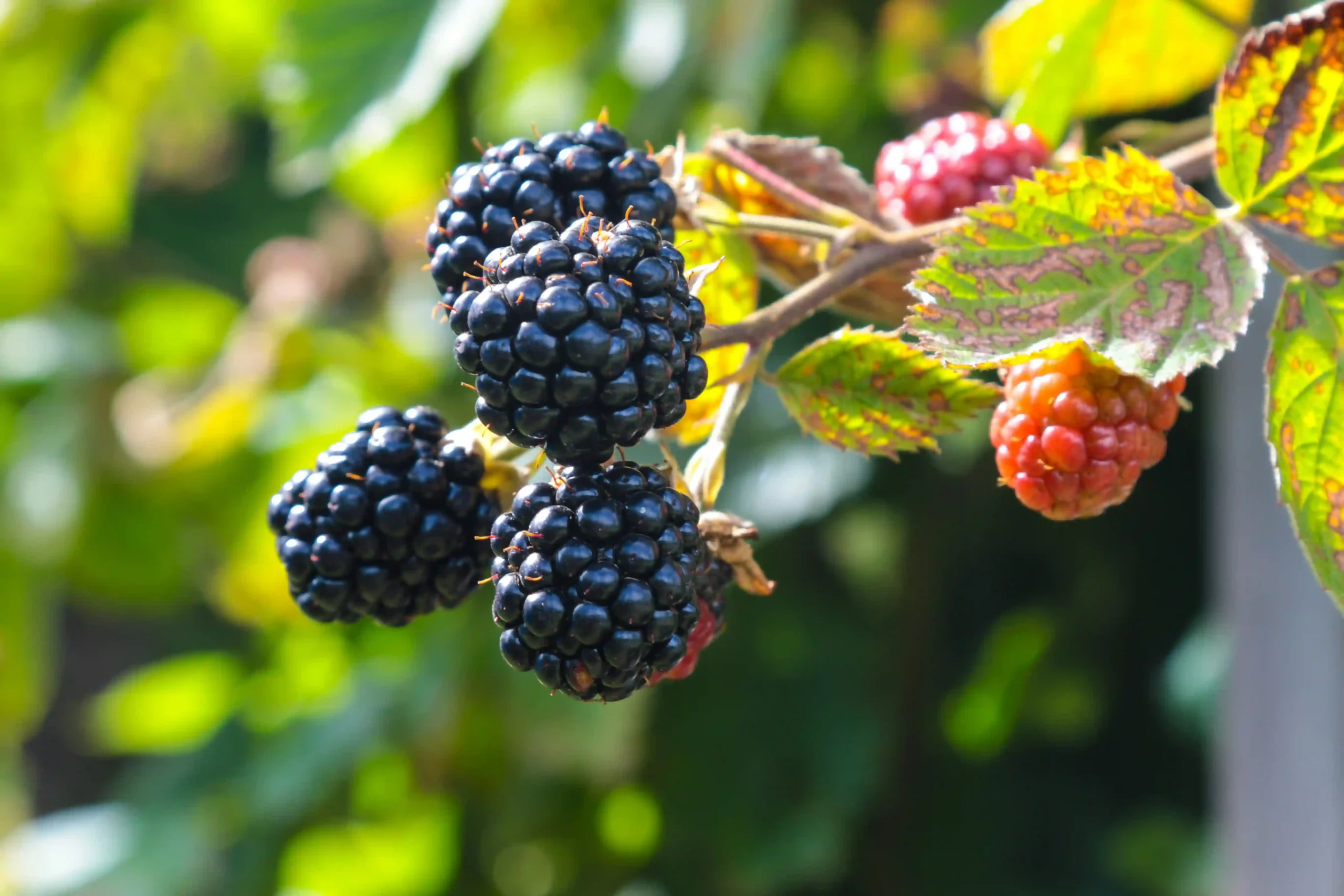
You are enjoying a bowl of fresh strawberries, and your dog is giving you that look — ears up, eyes wide, tail moving. It is one of the most relatable moments in pet ownership. But before you toss one over, it is completely fair to wonder: can dogs eat strawberries, or is this one of those foods that look harmless but are not?
The good news is that yes, dogs can eat strawberries. They are not toxic to dogs and actually pack a solid range of nutrients. According to the American Kennel Club, strawberries are a non-toxic, fiber-rich fruit that many dogs can safely enjoy as a treat. But “safe” comes with conditions. The wrong form, too large a portion, or a dog with specific health issues can turn a healthy snack into a problem.
You will find your answers here related to what strawberries do for a dog’s body, how many are safe to give, which dogs should avoid them, what fruits can dogs eat alongside strawberries, and the one preparation mistake that most owners make.
Table of Contents
Video credit petmoo via YouTube.
1. Are Strawberries Safe for Dogs? The Direct Answer
Yes, strawberries are safe for dogs to eat when served plain, fresh, properly prepared, and in moderation. They contain no compounds that are toxic to dogs, unlike grapes, raisins, or cherries, which can cause serious harm.
The American Kennel Club (AKC) explicitly lists strawberries as a dog-safe fruit, and multiple veterinary nutritionists have confirmed this. Purina Nutritionist Karina Carbo-Johnson, MS, says that strawberries should be considered treats and should make up no more than ten percent of a dog’s daily calorie intake.
What Makes Strawberries Safe (and What Does Not)
Plain, fresh, or unsweetened frozen strawberries are safe. Here is a quick breakdown of all common forms:
Form of Strawberry | Safe for Dogs? — Reason |
Fresh, washed, hulled | YES — Plain, no additives |
Plain frozen, sliced | YES — No added sugar or preservatives |
Dried (plain, homemade) | SMALL AMOUNTS ONLY — More concentrated sugar |
Canned in syrup | NO — Extremely high sugar content |
Strawberry jam or jelly | NO — Loaded with sugar, may contain xylitol |
Chocolate covered | NO — Chocolate is toxic to dogs |
Flavored yogurt with strawberry | NO — Added sugar, possible xylitol |
Plain Greek yogurt + fresh strawberries | USUALLY FINE — Check for xylitol in yogurt first |
Artificial strawberry flavoring | NO — Contains additives and sweeteners |
The pattern is simple: natural strawberries are good; processed strawberries are risky. Always read ingredient labels before sharing anything with your dog.
2. Nutritional Value of Strawberries for Dogs
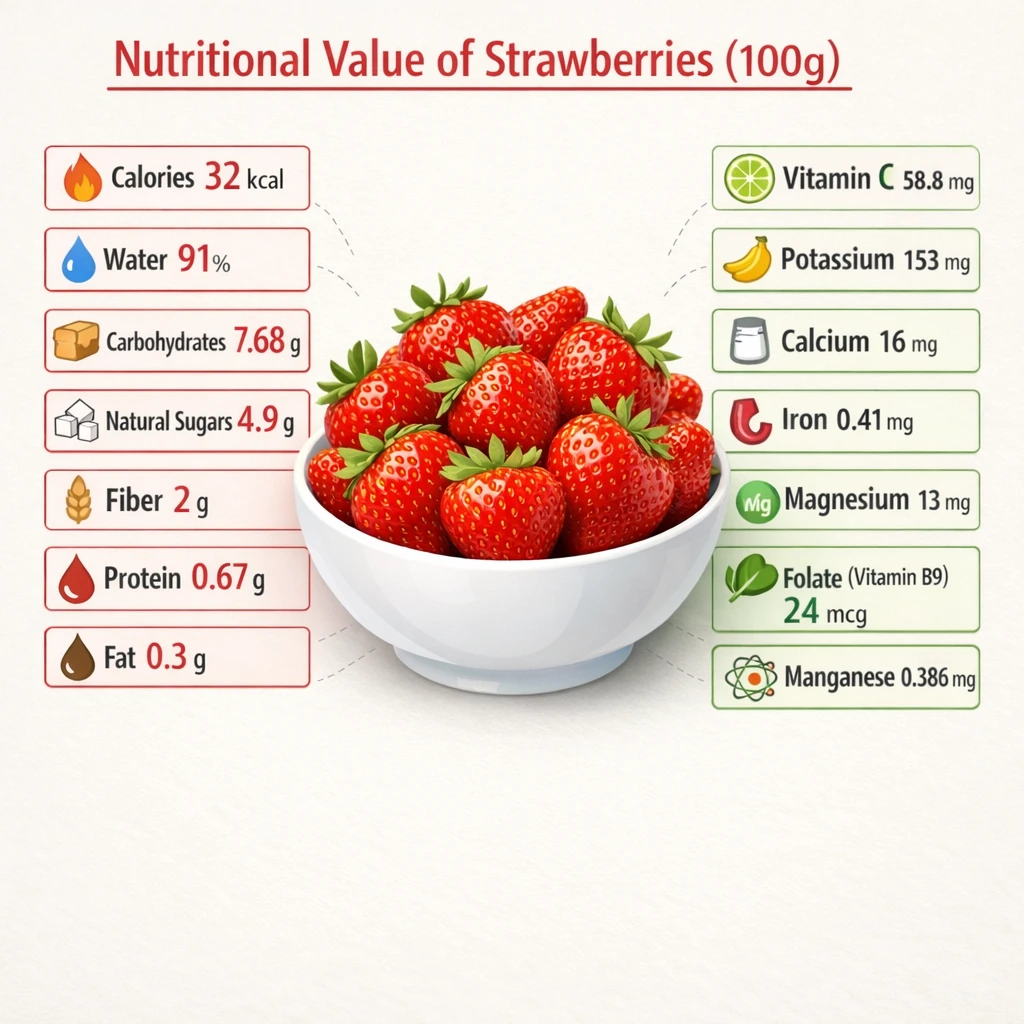
Strawberries are one of the most nutrient-dense fruits you can safely share with your dog. According to the USDA FoodData Central database, 100 grams of raw fresh strawberries contain:
Nutrient | Amount per 100g |
Calories | 32 kcal (extremely low) |
Water content | About 91% — one of the most hydrating fruits |
Carbohydrates | 7.96 grams |
Natural sugars | About 4.9 grams |
Dietary fiber | 2 grams |
Protein | 0.64 grams |
Fat | 0.22 grams |
Vitamin C | Approximately 59.6 mg |
Potassium | 161 mg |
Calcium | 17 mg |
Iron | 0.26 mg |
Magnesium | 12.5 mg |
Folate (Vitamin B9) | 24 mcg |
Manganese | 0.386 mg |
At only 32 calories per 100 grams, strawberries are one of the lowest-calorie fruits available. One medium strawberry contains fewer than 4 calories, making it one of the most practical treat swaps for dogs on a weight management plan.
Key Compounds That Make Strawberries Special
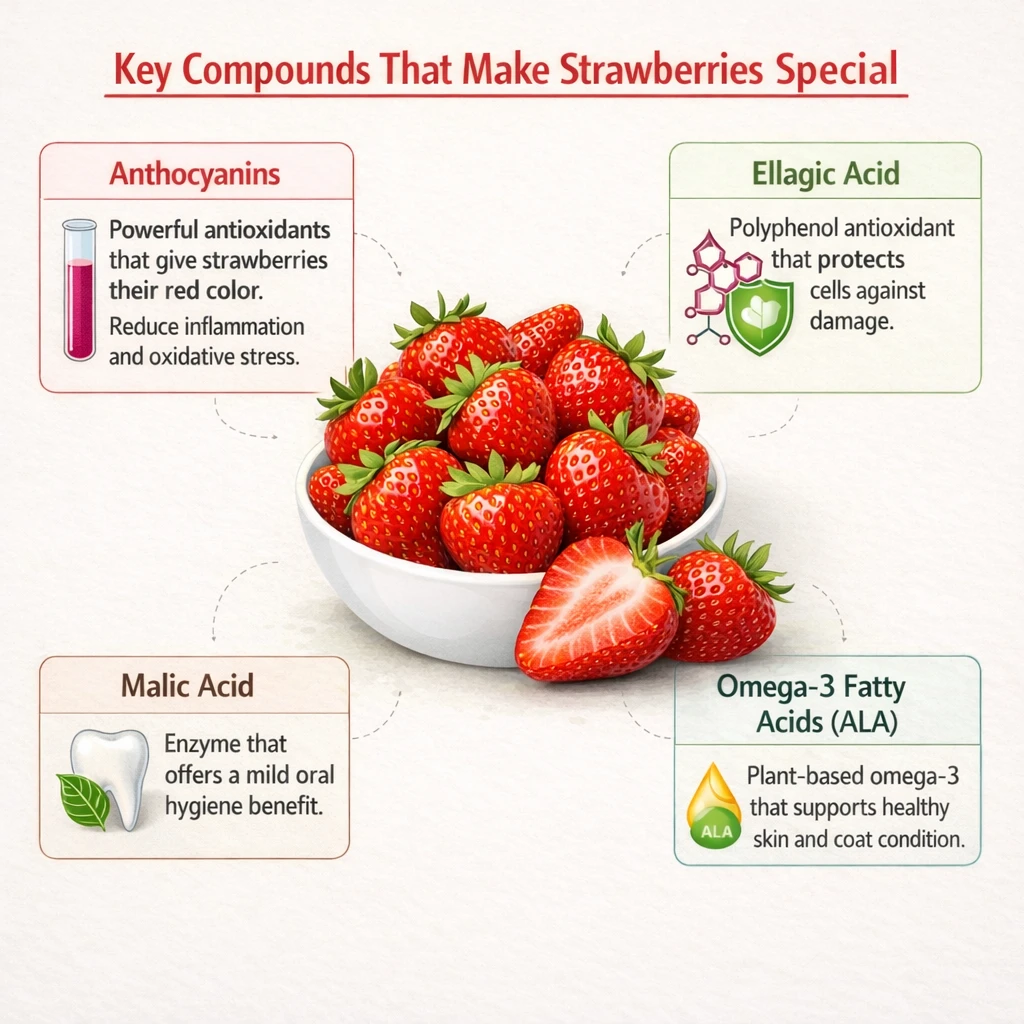
- Anthocyanins: These are the antioxidants that give strawberries their deep red color. They are well-studied for their anti-inflammatory properties and their role in reducing oxidative stress, which contributes to aging and chronic disease.
- Ellagic Acid: A polyphenol antioxidant with anti-inflammatory and cell-protective properties. Found in notable amounts in strawberries and studied for its potential role in protecting cells from damage.
- Malic Acid: A naturally occurring enzyme in strawberries that research suggests may help break down surface stains on teeth. It offers a mild oral hygiene benefit.
- Omega-3 Fatty Acids (ALA): Strawberries contain small amounts of alpha-linolenic acid, a plant-based omega-3 that supports healthy skin and coat condition.
A peer-reviewed review published in the Journal of Animal Physiology and Animal Nutrition (Tanprasertsuk, Tate, and Shmalberg, 2022) concluded that plant-based phytonutrients, including polyphenols and carotenoids found in fruits like strawberries, support immune health, cardiovascular health, and promote better visual and cognitive function in dogs.
3. Are Strawberries Good for Dogs? Real Health Benefits Explained
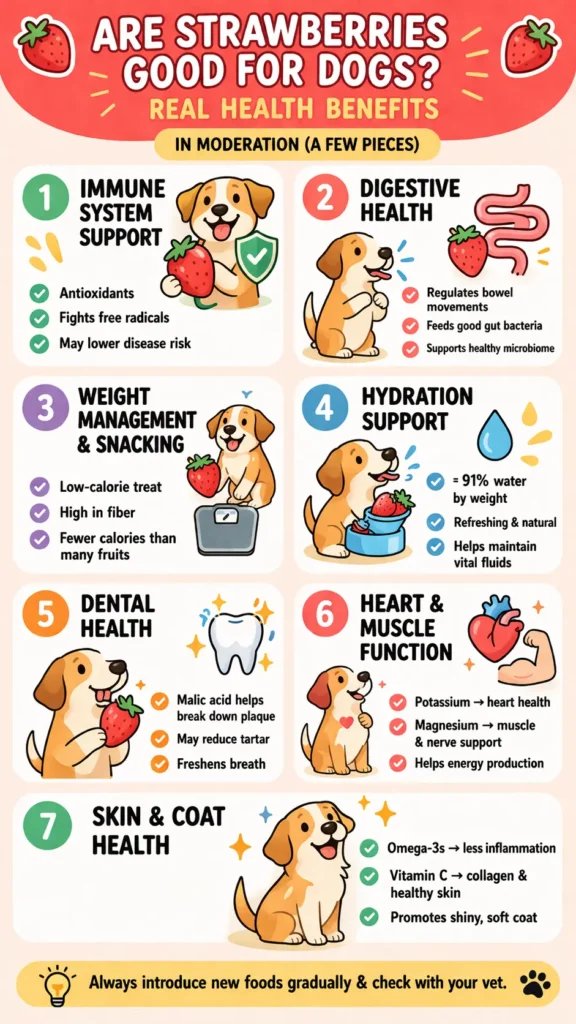
Yes, strawberries are genuinely good for dogs in the right amounts. Here is a deeper look at each real benefit.
Immune System Support Through Antioxidants
Strawberries are packed with three major antioxidants: vitamin C, anthocyanins, and ellagic acid. These work together to neutralize free radicals, which are unstable molecules that damage healthy cells over time. Free radicals are produced naturally by stress, illness, environmental toxins, and the normal aging process. In dogs, chronic oxidative stress plays a role in the development of conditions like cancer, heart disease, and arthritis.
Digestive Health and Gut Balance
Every 100 grams of fresh strawberries provides 2 grams of dietary fiber. Fiber supports healthy digestion in two ways. First, it regulates bowel movements by adding bulk to stools and reducing constipation. Second, it acts as a prebiotic, feeding the beneficial bacteria in your dog’s gut and supporting a healthy microbiome.
Weight Management and Low-Calorie Snacking
At fewer than 4 calories per medium strawberry, these berries are one of the smartest treat swaps available for overweight dogs. Many commercial dog treats contain 25 to 50 calories per piece. Replacing two or three of those treats daily with strawberry slices can meaningfully reduce your dog’s daily calorie intake without leaving them feeling shortchanged.
Dental Health: The Malic Acid Benefit
Malic acid, a natural enzyme found in strawberries, has been shown to help break down plaque, remove surface stains, and increase saliva production, which supports a healthier oral environment. Vitamin C in strawberries further aids in breaking down existing plaque buildup. It is critical to be clear here: strawberries are not a substitute for brushing your dog’s teeth or professional dental cleanings, but they offer a meaningful supporting benefit.
Hydration Support
Because strawberries are approximately 91 percent water by weight, they function almost like a liquid snack. On hot days, offering a few chilled or frozen strawberry slices helps contribute to your dog’s fluid intake while also giving them a refreshing treat.
Heart and Muscle Function
Potassium and magnesium in strawberries support heart muscle function, blood pressure regulation, and energy production. For senior dogs who may be starting to experience age-related cardiovascular changes, these minerals provide a modest but real supporting benefit.
Skin and Coat Health
The small amounts of omega-3 fatty acids and vitamin C in strawberries work together to support healthy skin and a shiny coat. Vitamin C plays a role in collagen production, which supports skin structure. Omega-3s reduce skin inflammation, which is particularly helpful for dogs with mild skin sensitivities.
4. Risks of Feeding Strawberries to Dogs
Knowing the risks is just as important as knowing the benefits. None of these risks are reason to avoid strawberries entirely, but they are reasons to be thoughtful about how you feed them.
Too Much Sugar Leading to Weight Gain and Dental Decay
One cup of strawberries contains approximately 7 grams of natural sugar. Compared to mangoes (23 grams per cup) or bananas (14 grams per cup), that is genuinely low. But sugar still adds up if portions are too large or too frequent. Over time, a high-sugar diet in dogs contributes to obesity, dental decay, and increased risk of type 2 diabetes.
Digestive Upset from Overconsumption
Strawberry fiber is beneficial in small amounts, but too much at once overwhelms the digestive system. The most common result is loose stools or diarrhea. Vomiting, gas, and bloating are also possible. If a dog eats too many strawberries, watch for signs of stomach upset and contact your vet if symptoms worsen or include blood in stools.
The stems and leaves of strawberries, while not toxic, are fibrous and difficult to digest. They can cause stomach upset on their own. Always remove them completely before serving.
Choking Hazard for Small Breeds
Whole strawberries, especially large ones, can be a choking risk for small and toy breeds. Cut strawberries into quarter-inch slices or pieces before serving. For very small dogs, mashing or pureeing the fruit is the safest approach. Frozen whole strawberries are an additional risk: a hard, frozen berry is even more likely to cause choking or crack a tooth. Always slice before freezing.
USDA found detectable pesticide residue on over 90 percent of conventionally grown strawberries, even after standard washing. The most effective step is a thorough wash under running water for at least 30 seconds, which removes most surface residue. Never share strawberries that are soft in a bad way, smell fermented, or show any visible mold, as spoiled fruit can cause genuine gastrointestinal illness in dogs.
Drug and Condition Interactions
- Diabetic dogs: Strawberries contain natural sugars that can affect blood glucose levels. Diabetic dogs should only receive strawberries under direct veterinary supervision.
- Dogs with pancreatitis: While strawberries are low in fat, the sugar content may still trigger flare-ups in sensitive dogs.
- Dogs with thyroid conditions: Consult your vet before adding strawberries to the diet.
- Overweight dogs: Reduce or eliminate other treats to compensate for the calories in strawberries.
5. Are Dogs Allergic to Strawberries? Signs to Watch For
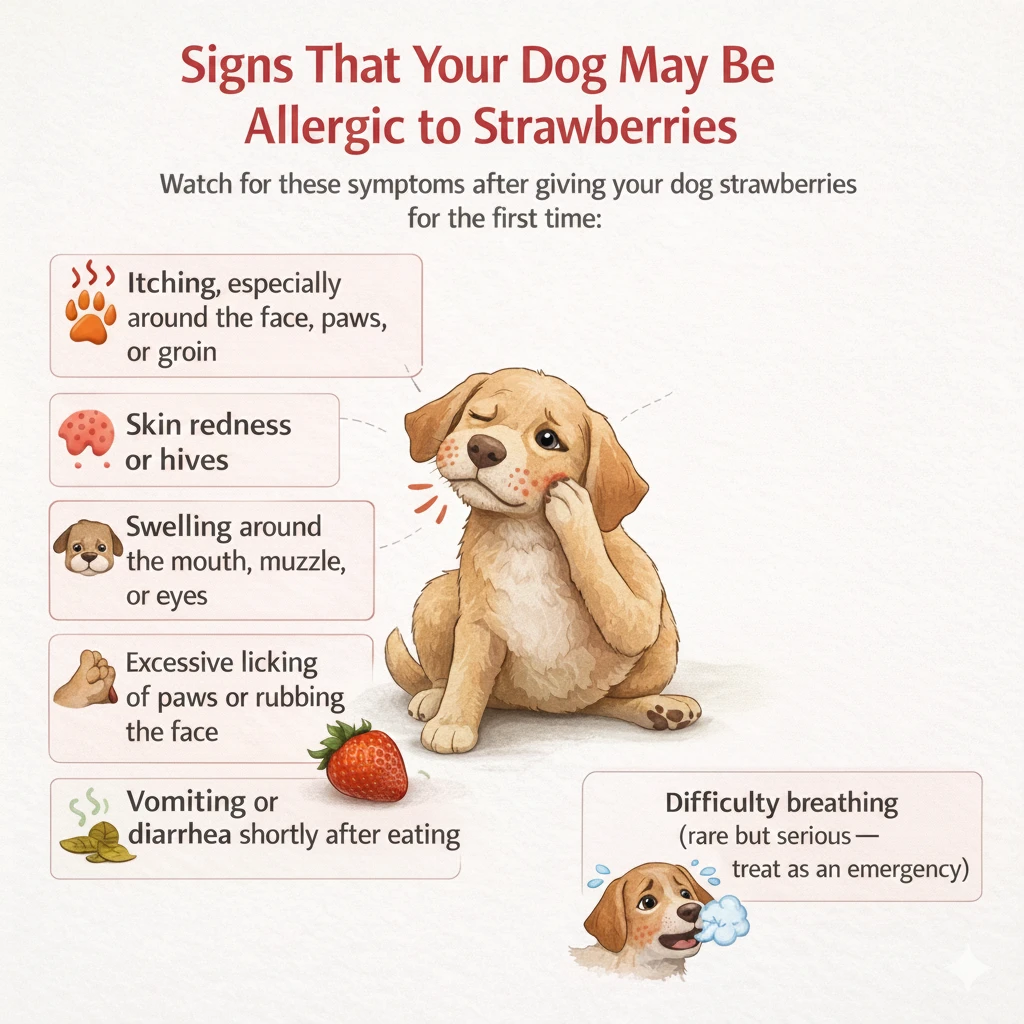
Food allergies in dogs are real, and while strawberry allergies are uncommon, they do occur. Veterinary dermatologists note that strawberries may cross-react with environmental allergens, triggering the same kind of allergic response in sensitive dogs. This means a dog who shows seasonal allergies may have a higher chance of reacting to strawberries, not because the strawberry itself is the primary allergen, but because its proteins structurally resemble something the dog’s immune system is already primed to fight.
Signs That Your Dog May Be Allergic to Strawberries
- Itching, especially around the face, paws, or groin
- Skin redness or hives
- Swelling around the mouth, muzzle, or eyes
- Excessive licking of paws or rubbing the face
- Vomiting or diarrhea shortly after eating
Difficulty breathing (rare but serious — treat as an emergency)
If you see itching, swelling, or digestive distress after feeding strawberries, stop immediately and contact your vet. Severe reactions, including breathing difficulty require emergency veterinary care.
How to Introduce Strawberries Safely for the First Time
The safest approach for any new food is the one-and-wait method. Offer a single small piece. Wait 24 to 48 hours. If no reaction occurs, strawberries can be considered safe for that dog in moderate amounts. Build up gradually from there, always monitoring how your dog responds.
6. How to Safely Prepare and Serve Strawberries to Your Dog
Step-by-Step Preparation Guide

Preparation is everything with strawberries. The fruit itself is safe. How you prepare and serve it determines whether it stays that way.
Strawberry selection
Choose fresh, ripe strawberries. Avoid any that are moldy, overly soft, or fermenting. Freshness matters more than organic certification for overall food safety.
Wash thoroughly under running water
Wash thoroughly under running water for at least 30 seconds. This removes the majority of surface pesticide residue, dirt, and bacteria.
Remove the unwanted parts
Remove the stem, hull, and leaves completely. Stems and leaves are not toxic but are difficult to digest and can cause stomach upset.
cut into pieces that your dog can easily eat
Cut into appropriate sizes based on your dog’s size. See the serving guide below.
serve
Serve plain. No added sugar, no sweeteners, no cream, no chocolate. Yogurt is only acceptable if it is plain and confirmed to contain no xylitol.
Serving Size Guide by Dog Size

Dog Size | Approximate Weight | Safe Daily Serving |
Toy / Extra Small | Under 10 lbs | Half of 1 small strawberry |
Small | 10 to 22 lbs | 1 to 2 small strawberries |
Medium | 22 to 55 lbs | 3 to 4 medium strawberries |
Large | 55 to 90 lbs | 4 to 5 medium strawberries |
Giant | Over 90 lbs | 5 to 6 medium strawberries |
These numbers align with the 90/10 rule: treats, including fruit, should not exceed 10 percent of total daily calorie intake. One medium strawberry contains roughly 4 calories. Adjust the serving if your dog also receives other treats that day. For more estimated amount, use the calculator below:
🍓 Strawberry Serving Size Calculator for Dogs
Enter your dog’s weight to find the safe daily serving of strawberries
✓ Always remove the green stem and leaves
✓ Cut into small pieces to prevent choking
✓ For toy/small dogs – mash or puree the strawberry
✓ Always serve fresh – never canned or in syrup
✓ Wash thoroughly before serving
✓ Start with just a small piece to test for allergic reaction
✓ Strawberries contain natural sugar – limit for diabetic dogs
✓ Treats should never exceed 10% of daily calorie intake
✓ Stop immediately if you notice vomiting or diarrhea
✓ Consult your vet if your dog has kidney or health conditions
This calculator is a general guide only. Always consult your veterinarian for personalised advice.
Fun Ways to Serve Strawberries

- Fresh and sliced: The simplest approach. Wash, hull, slice, and serve as a treat or mixed into regular food.
- Mashed or pureed: Ideal for small dogs, senior dogs with dental pain, or dogs who prefer soft textures. Mix a tablespoon of pureed strawberry into kibble for a flavour boost.
- Frozen and sliced: A fantastic hot-weather treat. Slice first, then freeze flat on a tray. Do not freeze whole strawberries as they become choking hazards and can crack teeth.
- KONG or puzzle toy stuffed: Mix a small amount of mashed strawberry with plain Greek yogurt (confirmed xylitol-free), stuff into a KONG toy, and freeze for an engaging snack.
- Training treats: Because strawberries are low in calories, soft, and sweet, many dogs find them highly motivating. Small pieces work well as training rewards.
What to Absolutely Avoid
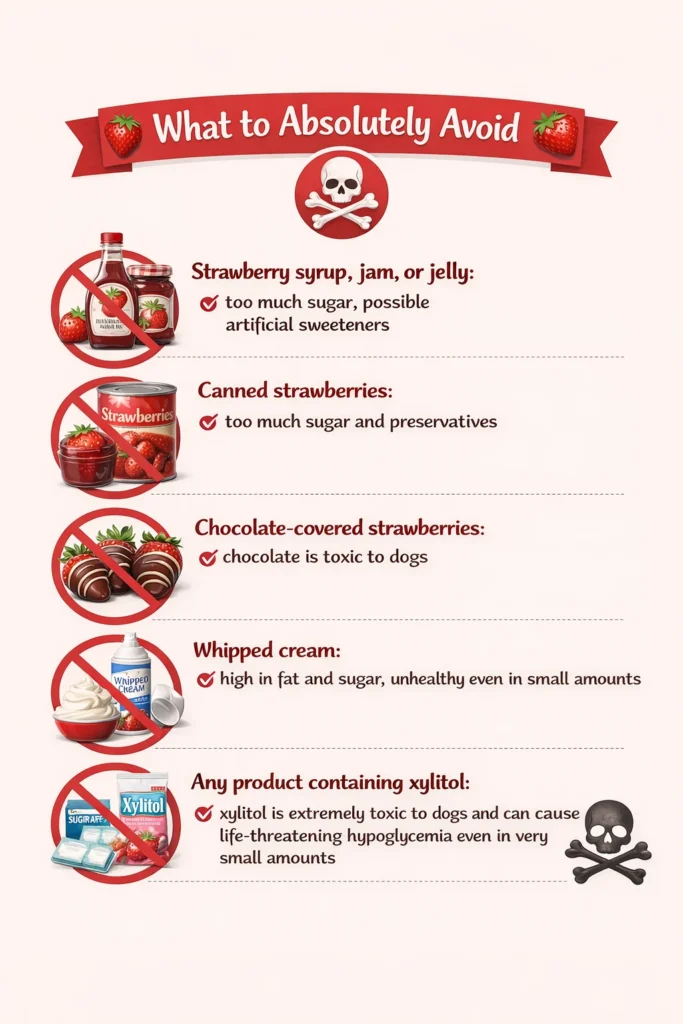
NEVER give your dog any of the following:
- Strawberry syrup, jam, or jelly --- too much sugar, possible artificial sweeteners
- Canned strawberries --- too much sugar and preservatives
- Chocolate-covered strawberries --- chocolate is toxic to dogs
- Whipped cream --- high in fat and sugar
- Any product containing xylitol --- extremely toxic to dogs, can cause life-threatening hypoglycemia even in very small amounts
7. What Fruits Can Dogs Eat? Strawberries vs Other Fruits
Understanding where strawberries sit among other fruits helps you make smarter choices about what to include in a varied, healthy treat rotation for your dog.
Complete Fruit Comparison Table for Dogs
Fruits That Are Safe for Dogs:
Fruit | Calories/100g | Sugar/100g | Key Benefit | Key Risk |
Strawberries | 32 kcal | 4.9g | Antioxidants, vitamin C, malic acid | Pesticides, sugar, if overfed |
Blueberries | 57 kcal | 9.96g | Powerful antioxidants, brain health | Choking risk for small dogs |
Watermelon (seedless) | 30 kcal | 6.2g | Extremely hydrating | Remove rind and seeds |
Apples (no seeds) | 52 kcal | 10.4g | Fiber, vitamins A and C | Seeds contain cyanide compounds |
Bananas (limited) | 89 kcal | 12.2g | Potassium, magnesium | High sugar and calories |
Raspberries (limited) | 52 kcal | 4.4g | Antioxidants, low calorie | Tiny natural xylitol amounts |
Cranberries (plain) | 46 kcal | 4.3g | Urinary tract support | Very tart, GI upset in large amounts |
Mangoes (no pit) | 60 kcal | 13.7g | Vitamins A, B6, C, E | High sugar, pit is dangerous |
Fruits That Are NEVER Safe for Dogs:
Fruit | Safe? | Why It Is Dangerous |
Grapes and Raisins | NEVER | Cause acute kidney failure ---no safe amount |
Cherries (whole) | NO | Pit contains cyanide compounds |
Avocado | NO | Persin is toxic to dogs |
Strawberries stand out in this comparison for their combination of very low calories, relatively low sugar, and high antioxidant value. They require minimal prep compared to apples or mangoes, and contain no parts that are toxic when accidentally ingested. If the table above sparked your curiosity about other safe fruit options, our complete guide on what fruit can dogs eat walks you through every fruit with detailed preparation tips and portion sizes.
The Simplest Safe Fruit Rotation for Dogs
A practical approach many canine nutritionists recommend is rotating two or three dog-safe fruits across the week rather than giving the same one daily. For example:
- Monday and Wednesday: A few fresh strawberry slices
- Friday: Two or three blueberries
- Weekend: A small wedge of seedless watermelon
This rotation keeps your dog interested, provides a broader range of micronutrients, and prevents any single fruit's sugar content from accumulating too quickly.
8. Special Cases: Puppies, Senior Dogs, and Diabetic Dogs
Can Puppies Eat Strawberries?
Yes, puppies can eat strawberries in tiny amounts once they are fully weaned and eating solid food enthusiastically. A single small piece to start is appropriate. Keep in mind that puppies have weak digestive systems, which means they are more likely to experience stomach upset from any new food. Introduce strawberries gradually and do not make them a regular part of a puppy's diet. Their primary nutritional needs should be met entirely by a complete and balanced puppy food.
Can Senior Dogs Eat Strawberries?
Senior dogs can actually benefit more from strawberries than younger dogs in some ways. The antioxidant compounds in strawberries, particularly anthocyanins and ellagic acid, directly address the oxidative stress that accelerates aging in older dogs. They are also useful for senior dogs managing their weight, as the low calorie count makes them a guilt-free treat option.
The main consideration for senior dogs is dental health. Some older dogs have sore or sensitive mouths, making whole strawberry pieces uncomfortable. Mashing or pureeing the fruit solves this completely.
Can Dogs Eat Frozen Strawberries?
Yes, frozen strawberries make a refreshing treat, especially in hot weather. Always slice strawberries before freezing, a whole frozen strawberry is hard enough to pose a choking risk or crack a tooth. Let them sit for a minute before serving to small dogs.
Can Diabetic Dogs Eat Strawberries?
This is one of the most searched questions about dogs and strawberries, and the honest answer is: with caution and only with veterinary approval. Strawberries contain natural fructose that can still affect blood glucose levels in diabetic dogs. While they are lower in sugar than most fruits, they can still cause blood glucose spikes in dogs prone to metabolic conditions.
Some veterinarians do include small amounts of low-sugar fruits in carefully managed diabetic treatment plans. Others prefer to use treats specifically formulated for diabetic dogs. If your dog is diabetic and you want to offer strawberries, speak with your vet first.
9. Frequently Asked Questions on Dogs and Strawberries
Can dogs eat strawberries?
Yes, dogs can eat strawberries safely when they are fresh, plain, properly prepared, and given in moderation. Strawberries are non-toxic to dogs and provide real nutritional benefits, including vitamin C, fiber, and antioxidants. Always remove the stems and leaves, cut them into small pieces, and follow size-appropriate serving guidelines.
What happens if a dog eats too many strawberries?
If a dog eats too many strawberries, the most likely result is digestive upset, including loose stools, diarrhea, vomiting, or gas. This happens because of the high fiber and natural sugar content. In most cases, the symptoms resolve on their own within 24 hours. Contact your vet if symptoms are severe, persist beyond 24 hours, or include blood in the stool.
Can diabetic dogs eat strawberries?
Diabetic dogs should only eat strawberries under direct veterinary supervision. While strawberries are lower in sugar than most fruits, their natural fructose can still affect blood glucose levels in diabetic dogs. Some vets do allow small amounts as an occasional treat with glucose monitoring, while others recommend avoiding them. Always consult your vet first.
How many strawberries can I give my dog in a day?
The right number depends on your dog's size. Small dogs (10 to 22 lbs) can have 1 to 2 small strawberries. Medium dogs (22 to 55 lbs) can have 3 to 4. Large dogs (55 to 90 lbs) can have 4 to 5. All treats, including strawberries, should stay within the 90/10 rule: no more than 10 percent of total daily calorie intake. One medium strawberry contains roughly 4 calories.
Do strawberries have any health benefits for dogs?
Yes, strawberries have genuine health benefits for dogs. They are rich in vitamin C, anthocyanins, and ellagic acid, which together support immune function and reduce oxidative stress. They are also a source of fiber for digestive health, malic acid for mild dental support, and omega-3 fatty acids for skin and coat condition. At only 32 calories per 100 grams, they are one of the best low-calorie treat options available.
Are dogs allergic to strawberries?
True strawberry allergies in dogs are uncommon but do exist. Veterinary dermatologists note that strawberries may cross-react with environmental allergens, triggering an immune response in some sensitive dogs. Signs of an allergic reaction include itching, skin redness, facial swelling, and digestive upset. Introduce strawberries gradually and watch your dog closely the first time you offer them.
What fruits can dogs eat besides strawberries?
Dogs can safely eat blueberries, watermelon (seedless, no rind), apples (no seeds), bananas (in limited amounts), raspberries (small amounts), and plain cranberries. Fruits that are toxic to dogs include grapes, raisins, and cherries. Avocado should also be avoided. Always introduce new fruits one at a time and in small amounts, and check with your vet if your dog has any health conditions.
Can dogs eat strawberry leaves and stems?
Strawberry leaves and stems are not toxic to dogs, but they are fibrous and difficult to digest. Eating them can cause stomach upset, vomiting, or diarrhea. They also offer no nutritional benefit to dogs. For these reasons, always remove the leaves and stems completely before offering strawberries to your dog.
10. Conclusion
So, can dogs eat strawberries? Absolutely, and when prepared correctly, they are one of the smartest fruit treats you can offer your dog. They are low in calories, rich in antioxidants, genuinely supportive of immune health and digestion, and require almost no prep.
The three things every dog owner needs to remember:
- Always serve strawberries fresh, plain, and with the stems and leaves fully removed.
- Stick to the size-appropriate serving limits and keep them within the 10 percent daily treat allowance.
- Introduce them slowly the first time and watch for any signs of an allergic reaction.
If your dog takes regular medication or has a health condition like diabetes or pancreatitis, check with your vet before adding strawberries to their diet. For most healthy dogs, a few clean, sliced strawberries two or three times a week is a safe, enjoyable, and genuinely beneficial treat they will love.
Always consult your veterinarian before introducing new foods to your dog's diet, especially if your dog has a health condition, food sensitivities, or is on a prescription diet.

Muhammad Saad writes about pet nutrition and safety at Petscriz, researching each topic against peer-reviewed and veterinary sources. Firsthand animal care experience includes freshwater fish, rabbits, cats, parrots, and chicks; dog-related content is compiled from cited research rather than personal ownership, and is flagged accordingly throughout the site.