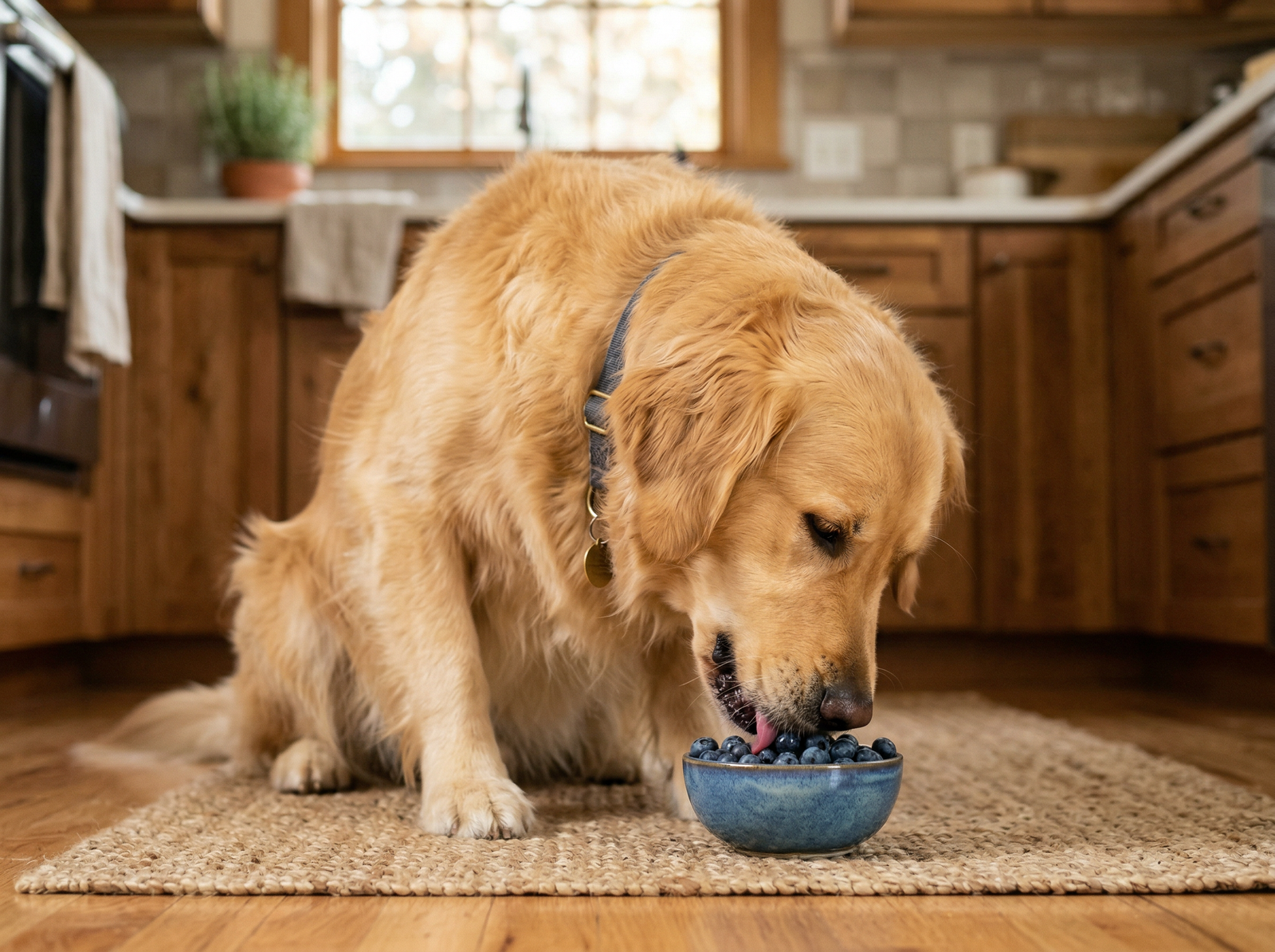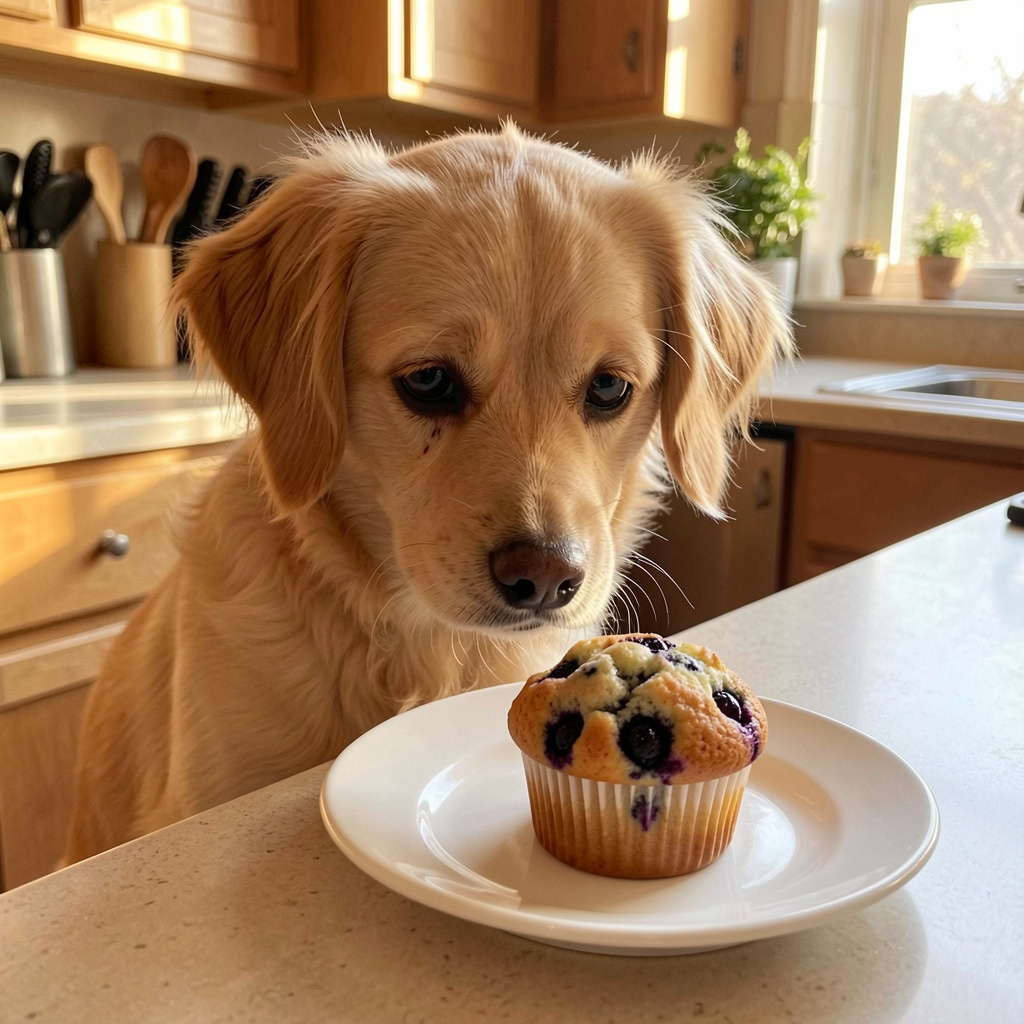
Can dogs have blueberry muffins? No, dogs should not eat regular blueberry muffins. Even though blueberries themselves are perfectly safe for dogs, the muffin around them is a different story. Ingredients like sugar, butter, and certain spices create a combination that ranges from unhealthy to genuinely dangerous, depending on the recipe.
In this guide, you will learn exactly why blueberry muffins are a poor choice for your dog, which specific ingredients to watch out for, what to do if your dog already ate one, how different muffin varieties compare in terms of risk, and how to bake a truly dog-friendly blueberry muffin your pup will love just as much.
Table of Contents
1. Are Blueberry Muffins Safe for Dogs?
Blueberry muffins are not safe for dogs to eat on a regular basis, and some recipes contain ingredients that are outright toxic. While a small crumb that fell on the floor is unlikely to cause serious harm, intentionally feeding your dog a blueberry muffin is not a good idea.
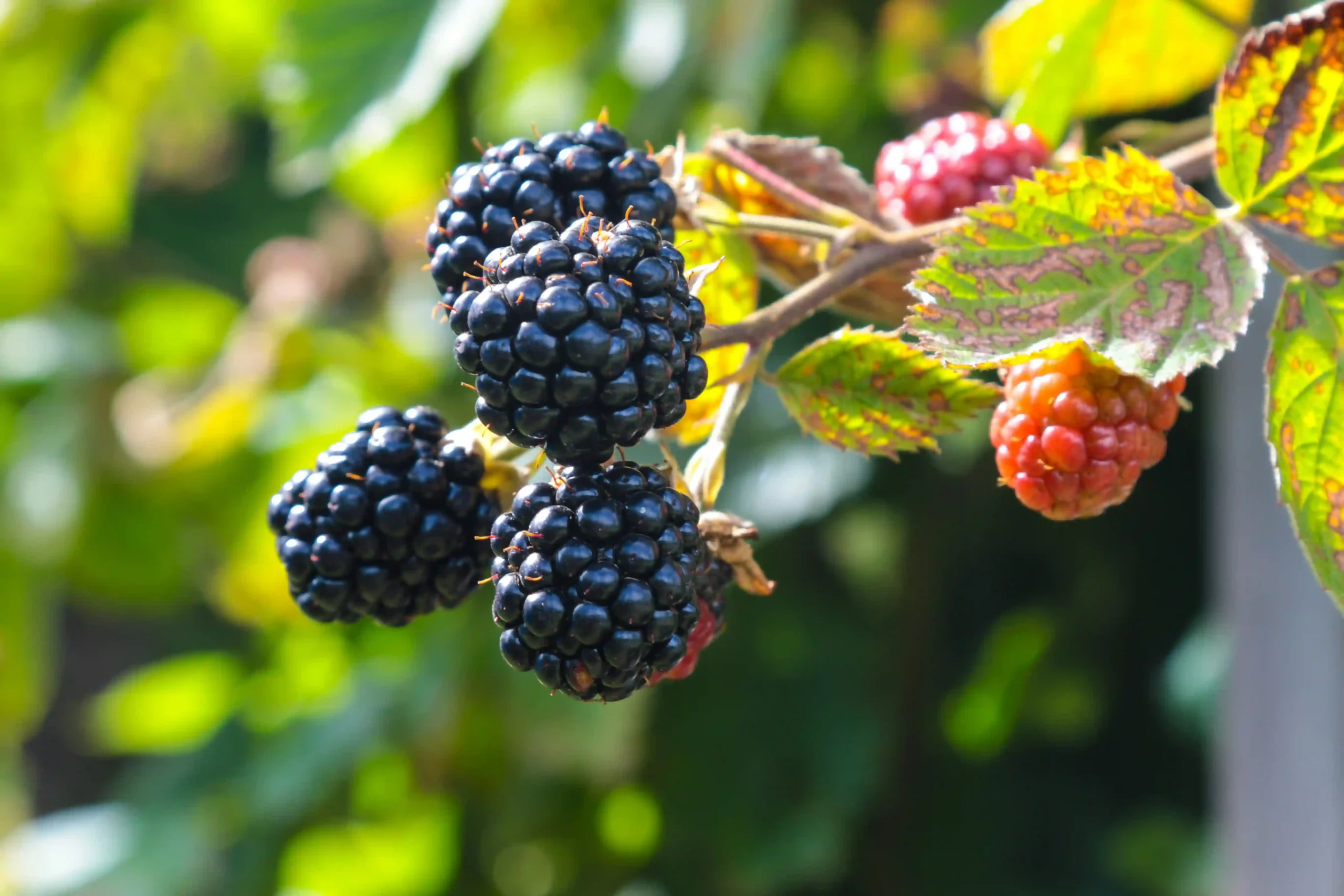
The confusion usually starts because blueberries get a lot of well-deserved praise as a dog-safe fruit. According to the American Kennel Club, fresh blueberries are low in calories, rich in antioxidants, and packed with vitamins C and K. They are a genuinely healthy snack for most dogs when served plain.
The problem is not the blueberry. The problem is everything else in the muffin.
Why the Muffin Part Is the Issue
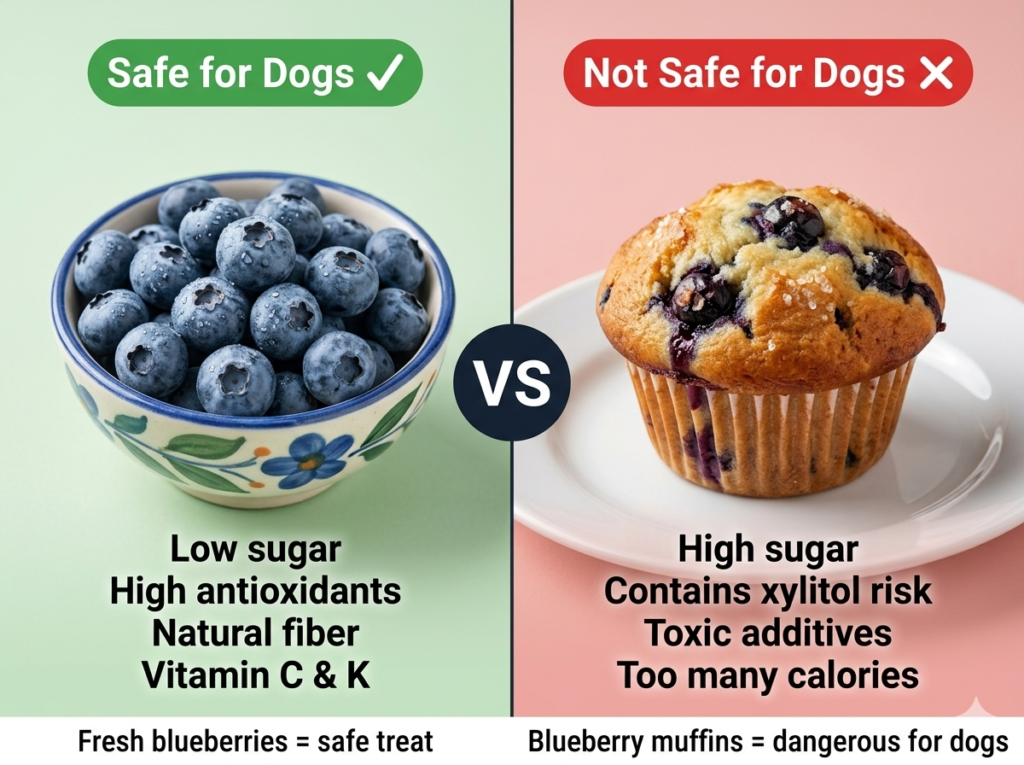
A standard blueberry muffin recipe calls for refined white flour, sugar, butter, eggs, milk, and often additional flavorings or spices. Some of those ingredients are harmless in tiny amounts. Others, like xylitol or nutmeg, can send your dog to the emergency vet.
Even the “harmless” ones like sugar and fat add up quickly. A typical store-bought blueberry muffin contains around 400 to 470 calories, 15 to 20 grams of fat, and 35 to 50 grams of sugar. That is a massive caloric and sugar load for a dog whose entire daily calorie budget might only be 200 to 1,000 calories, depending on their size and breed.
The 10% Treat Rule
Veterinary nutritionists widely recommend that treats and supplemental foods make up no more than 10% of a dog’s daily calorie intake. For a medium-sized dog weighing around 30 pounds, that ceiling is roughly 50 to 70 calories per day from treats. A single blueberry muffin can blow that budget six times over, before you even factor in the potentially harmful ingredients.
2. Dangerous Ingredients in Blueberry Muffins
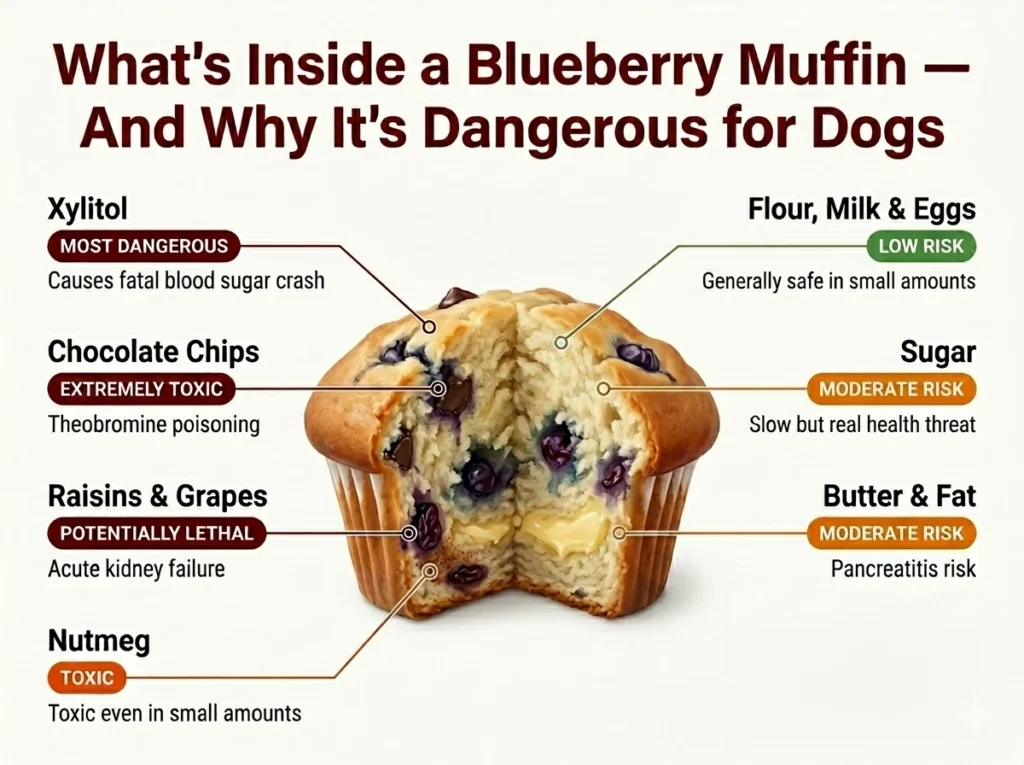
Understanding what is actually in a blueberry muffin helps you make a much better decision when your dog is giving you those eyes. Some of these ingredients are a minor concern. Others are a genuine emergency.
Xylitol: The Most Dangerous Ingredient
Xylitol is an artificial sweetener found in many “sugar-free” or “reduced-sugar” baked goods. It also appears in peanut butter, gum, candy, and some protein powders. For people, it is a perfectly harmless sugar substitute. For dogs, it is potentially lethal.
When a dog eats xylitol, the pancreas releases a massive flood of insulin in response. According to the Merck Veterinary Manual, doses greater than approximately 100 mg per kilogram of body weight can cause severe hypoglycemia (dangerously low blood sugar) in dogs. Doses above 500 mg per kilogram can cause acute liver failure. Signs of hypoglycemia can begin as quickly as 30 minutes after ingestion.
If a blueberry muffin recipe uses a sugar-free sweetener, always check the label specifically for xylitol before your dog gets anywhere near it.
Signs of xylitol poisoning in dogs:
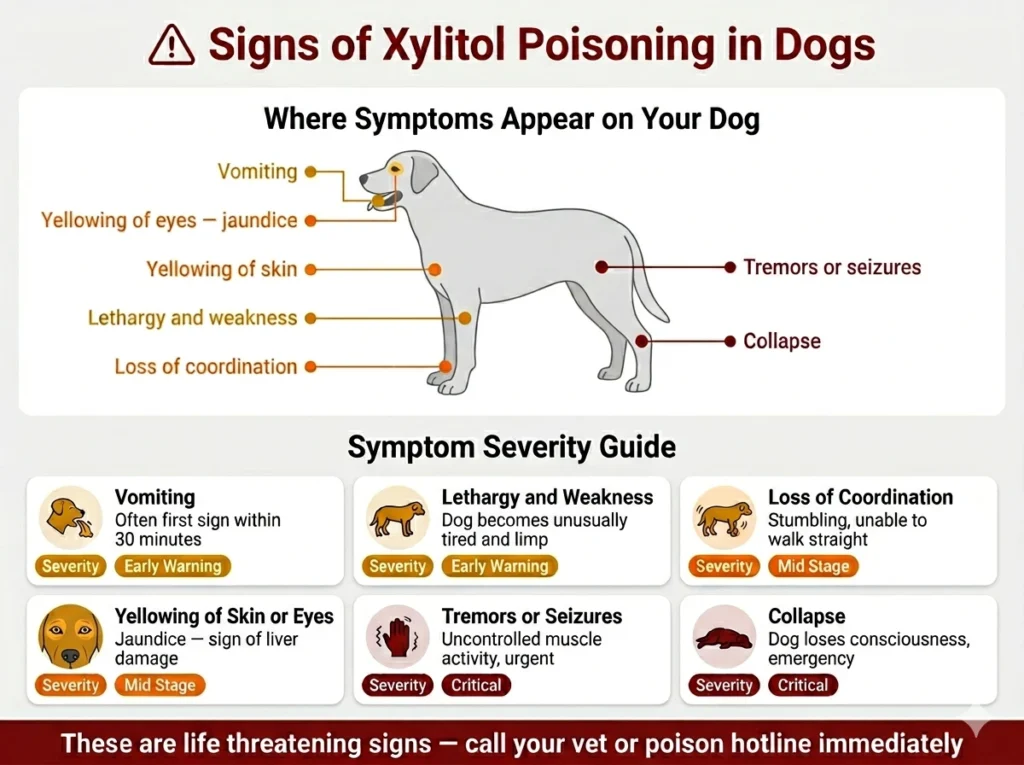
- Vomiting (often the first sign, appearing within 30 minutes)
- Lethargy and weakness
- Loss of coordination
- Tremors or seizures
- Collapse
- Yellowing of the skin or eyes (jaundice, indicating liver involvement)
If you suspect your dog ate anything containing xylitol, call your vet or the Pet Poison Helpline (855-764-7661) immediately. Do not wait for symptoms to appear.
Sugar: A Slow but Real Threat
Even regular table sugar is a problem for dogs, though it works more slowly than xylitol. Dogs have no nutritional need for added sugar, and a diet that regularly includes sugary foods can lead to obesity, dental decay, and over time, diabetes. Blueberry muffins made for people are loaded with refined sugar, making them a poor choice for dogs, even when no acutely toxic ingredients are present.
Fresh blueberries on the other hand, contain only natural sugars and deliver genuine nutritional value without any of these risks. If you want to know which fresh fruits make the safest and healthiest treats for your dog, our guide on what fruit can dogs eat breaks down every option with preparation tips and safe portion sizes.
Butter and Fat: Pancreatitis Risk
Muffins are made with significant amounts of butter or oil. While small amounts of fat are normal in a dog’s diet, a sudden large intake of fatty table scraps or human food is strongly associated with pancreatitis, an inflammation of the pancreas that can be extremely painful and, in severe cases life-threatening. Breeds like Miniature Schnauzers, Cocker Spaniels, and Yorkshire Terriers are particularly prone to pancreatitis, but any dog can be affected after eating a high-fat food.
Signs of pancreatitis include vomiting, diarrhea, hunching over in discomfort, loss of appetite, and lethargy. If your dog shows these signs within 24 hours of eating a rich or fatty food, contact your vet.
Nutmeg: Toxic in Even Small Amounts
Nutmeg is a spice that shows up in many baking recipes, including some blueberry muffin versions. It contains a compound called myristicin, which is toxic to dogs. Nutmeg can cause high blood pressure, increased heart rate, abdominal pain, and even seizures. The amount in a single muffin is unlikely to cause severe toxicity in a large dog, but for a small dog, even a small amount is a concern.
Chocolate Chips: An Obvious but Common Hazard
Some blueberry muffin recipes add chocolate chips for extra flavor. Chocolate contains theobromine and caffeine, both of which dogs cannot metabolize the way humans can. Dark chocolate and baking chocolate are the most toxic, but milk chocolate is still harmful in sufficient quantities. Signs of chocolate poisoning include vomiting, diarrhea, rapid breathing, tremors, and seizures. If your dog ate a muffin with chocolate chips, contact your vet right away.
Raisins and Grapes: Potentially Lethal
Some bakeries or home recipes add raisins alongside blueberries. Raisins and grapes are among the most dangerous foods for dogs. Even a very small amount can cause sudden, acute kidney failure in some dogs, and veterinary science still does not fully understand exactly why. If a muffin contains raisins, treat the situation as a medical emergency.
Flour, Milk, and Eggs: Generally Low Risk
Plain flour, milk, and eggs are not toxic to dogs in small amounts, though dogs with dairy sensitivity may experience mild stomach upset from milk products. These ingredients are the least worrying in the muffin lineup, but they still add empty calories with no benefit.
3. Are Lemon, Cheesecake, and Other Blueberry Muffin Varieties Safe for Dogs?
Dog owners often ask about specific muffin varieties. Here is a breakdown of the most common ones.
Can Dogs Have Lemon Blueberry Muffins?
Lemon blueberry muffins are not safe for dogs to eat. Lemons and other citrus fruits contain citric acid and essential oils (including limonene and linalool) that can irritate a dog’s digestive system. In small amounts, lemon might cause only mild stomach upset. In larger amounts or in concentrated forms like lemon zest or lemon extract, citrus can cause vomiting, diarrhea, and even neurological symptoms in dogs.
Bottom line: Can dogs have lemon blueberry muffins? No. The added citrus makes them even less suitable than a plain blueberry muffin.
Can Dogs Have Blueberry Cheesecake Muffins?
Blueberry cheesecake muffins are even more concerning than standard blueberry muffins. The cream cheese filling adds a significant boost of fat and dairy, dramatically increasing the pancreatitis risk. These muffins are also higher in calories and often contain added sugar in both the muffin base and the cheesecake layer.
Many dogs are also lactose intolerant to some degree. The high dairy content in cream cheese can cause digestive distress, including gas, bloating, and diarrhea.
Bottom line: Can dogs have blueberry cheesecake muffins? Absolutely not. The combination of fat, dairy, and sugar makes them one of the worst muffin options for dogs.
Can Dogs Have Homemade Blueberry Muffins?
Yes, but it depends entirely on the recipe. A standard homemade blueberry muffin made from a human recipe carries all the same risks as a store-bought one. However, homemade blueberry muffins are actually the safest option for dogs if you control the ingredients. By using whole wheat or oat flour, eliminating refined sugar, replacing butter with unsweetened applesauce, and using dog-safe add-ins, you can create a treat that is genuinely safe and enjoyable for your dog.
Bottom line: Can dogs have homemade blueberry muffins? Yes, if made with a dog-safe recipe specifically. No, if made from a standard human recipe.
Comparison Table: Blueberry Muffin Types and Dog Safety
Muffin Type | Primary Additional Risk | Safe for Dogs? |
Standard blueberry muffin | High sugar, high fat | No (occasional crumb is low risk) |
Sugar-free blueberry muffin | Possible xylitol content | Potentially toxic |
Lemon blueberry muffin | Citric acid, lemon essential oils | No |
Blueberry cheesecake muffin | Very high fat and dairy | No |
Commercial store-bought muffin | Unknown additives and preservatives | No |
Homemade (human recipe) | High sugar, high fat | No |
Dog-friendly homemade muffin | None (when made correctly) | Yes, in moderation |
4. What Happens If Your Dog Eats a Blueberry Muffin?
Do not panic. The action you take depends on how much your dog ate and what the muffin contained.
Your Dog Ate a Small Bite or Crumb
If your dog snagged a small piece of a plain blueberry muffin that does not contain any acutely toxic ingredients (no xylitol, no chocolate, no raisins, no nutmeg), you likely do not need to rush to the vet. Monitor them for signs of stomach upset like gas, loose stools, or mild lethargy. These should resolve on their own within 12 to 24 hours. Offer fresh water and stick to their regular food for the rest of the day.
Your Dog Ate an Entire Muffin or Multiple Muffins
A whole muffin or several muffins is a different situation. The volume of sugar and fat is now significant enough to cause real problems. Watch closely for:
- Vomiting or diarrhea
- Signs of abdominal pain (hunching, whining, reluctance to move)
- Lethargy
- Loss of appetite
If your dog is small, even one full muffin may represent an enormous caloric and sugar load relative to their body weight. Contact your vet for guidance.
The Muffin Contained Xylitol, Chocolate, Raisins, or Nutmeg
Call your vet or the ASPCA Animal Poison Control Center (888-426-4435) or Pet Poison Helpline (855-764-7661) immediately. Do not wait for symptoms. With xylitol in particular, symptoms can begin within 30 minutes, and treatment outcomes are dramatically better when you act before signs develop.
Have the following information ready when you call:
- Your dog’s weight
- Exactly what they ate and how much
- When they ate it
- Any symptoms already present
Signs of Blueberry Muffin Poisoning in Dogs
Depending on the ingredients, here is what to watch for:
Ingredient | Signs to Watch For |
Sugar / fat overload | Vomiting, diarrhea, lethargy, hunching (pancreatitis) |
Xylitol poisoning | Vomiting within 30 mins, weakness, tremors, seizures, and collapse |
Chocolate toxicity | Vomiting, diarrhea, rapid breathing, muscle tremors, increased heart rate |
Nutmeg toxicity | Agitation, increased heart rate, abdominal discomfort, seizures in severe cases |
Raisin toxicity | Vomiting, lethargy, reduced urination, kidney failure signs within 24 to 72 hours |
5. How to Make Dog-Friendly Blueberry Muffins at Home
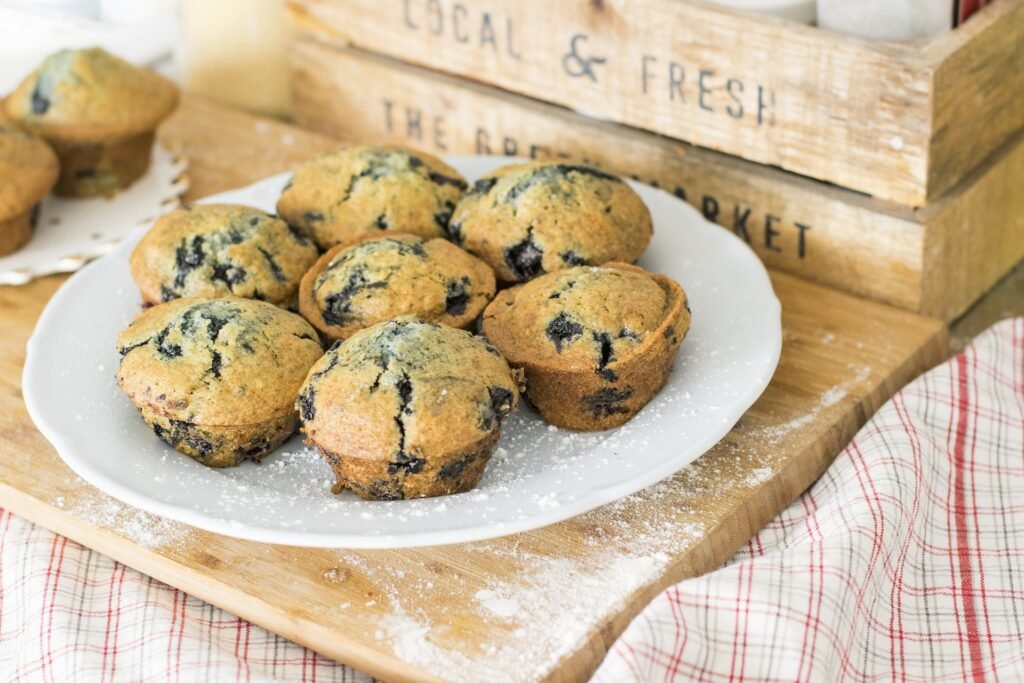
The good news is you do not have to watch your dog miss out on all the fun. Dog-friendly blueberry muffins are easy to make, require simple ingredients, and most dogs absolutely love them.
Safe Ingredient Substitutions
Human Muffin Ingredient | Dog-Safe Substitute |
White flour | Whole wheat flour or oat flour |
Refined sugar | None, or a tiny amount of raw honey |
Butter | Unsweetened applesauce |
Milk | Water or plain, unsweetened coconut water |
Artificial sweetener | Never use any sweeteners |
Spices (nutmeg, etc.) | Skip entirely or use a tiny pinch of cinnamon |
Ingredients to Absolutely Avoid in Dog Muffins
- Xylitol or any sugar-free sweetener
- Chocolate or cocoa of any kind
- Raisins or grapes
- Nutmeg or mace
- Onion or garlic powder
- Macadamia nuts
- Excess salt
A Simple Dog-Friendly Blueberry Muffin Recipe
Watch this step-by-step guide for making dog-safe blueberry muffins. Video Credit: Paola Santana via YouTube.
Ingredients:
- 2-3 cups oat flour
- 1-2 cups oats
- 1 egg
- 1/3 cup unsweetened applesauce
- 1/2 cup fresh or frozen blueberries (plain, unsweetened)
- Optional: 1 tablespoon plain, unsweetened peanut butter (check label carefully for xylitol)
Instructions:
- Preheat your oven to 350 degrees Fahrenheit (177 degrees Celsius).
- Mix the dry ingredients together in a large bowl.
- In a separate bowl, whisk the eggs and applesauce.
- Combine the wet and dry ingredients until just mixed. Do not overmix.
- Gently fold in the blueberries.
- Spoon the batter into a greased or lined mini muffin tin.
- Bake for 10 to 15 minutes or until a toothpick comes out clean.
- Let cool completely before serving to your dog.
Serving size: One mini muffin for small dogs, up to two for medium and large dogs. Treat these as occasional snacks, not daily food. Use this calculator below to find the exact safe amount:
🥑 Blueberry Muffin Serving Size Calculator for Dogs
Enter your dog’s exact weight for a precise safe serving of dog-friendly blueberry muffin
✓ Whole wheat or oat flour
✓ Fresh or frozen plain blueberries
✓ Unsweetened applesauce instead of butter
✓ Eggs and plain unsweetened yogurt
✓ Tiny pinch of cinnamon (optional)
✗ Xylitol — potentially fatal to dogs
✗ Chocolate or cocoa — toxic to dogs
✗ Raisins or grapes — causes kidney failure
✗ Nutmeg — toxic even in small amounts
✗ Excess sugar, salt, or artificial sweeteners
✓ Only feed homemade dog-friendly muffins — never store-bought
✓ Let muffins cool completely before serving
✓ Store in fridge up to 5 days or freeze up to 2 months
✓ Introduce gradually — start with a small bite first
✓ Always check peanut butter labels for xylitol if using
This calculator is a general guide only. Always consult your veterinarian for personalised advice.
Storage: Store in an airtight container in the refrigerator for up to five days, or freeze for up to two months.
Why Homemade Is the Best Option
When you bake dog-friendly blueberry muffins at home, you know exactly what is in them. There are no hidden sweeteners, no suspicious preservatives, and no guessing about ingredient labels. You control the portion size, the calorie count, and the quality of every ingredient.
6. Frequently Asked Questions
Are blueberry muffins toxic to dogs?
Blueberry muffins are not automatically toxic to dogs, but they can be. Standard muffins contain high levels of sugar and fat that are unhealthy for dogs. Certain muffin recipes also include genuinely toxic ingredients like xylitol, chocolate, raisins, or nutmeg. A plain muffin crumb is unlikely to cause serious harm, but whole muffins or muffins with toxic ingredients require immediate veterinary attention.
What are the signs of blueberry muffin poisoning in dogs?
Signs depend on what the muffin contained. If the muffin had xylitol, expect vomiting, weakness, tremors, and seizures within 30 to 60 minutes. Chocolate causes vomiting, diarrhea, rapid breathing, and increased heart rate. High sugar and fat intake can lead to pancreatitis, shown by abdominal pain, hunching, vomiting, and lethargy. Raisin toxicity causes vomiting and kidney failure signs within 24 to 72 hours.
Is xylitol in blueberry muffins dangerous for pets?
Yes, xylitol is extremely dangerous for dogs. According to the Merck Veterinary Manual, even doses above 100 mg per kilogram of body weight can cause severe hypoglycemia in dogs. Higher doses can cause liver failure. Symptoms can begin as quickly as 30 minutes after ingestion. If you suspect your dog ate a muffin containing xylitol, contact a veterinarian immediately without waiting for symptoms.
What happens if my cat eats a blueberry muffin?
Cats are much less at risk from blueberry muffins than dogs. According to the ASPCA, xylitol does not cause the same hypoglycemia or liver damage in cats that it does in dogs. However, cats can still experience stomach upset from the high sugar and fat content. A small bite is unlikely to be dangerous, but blueberry muffins offer no nutritional benefit to cats and should not be shared regularly.
Can dogs eat the blueberries out of a muffin?
Yes, plain blueberries are safe for dogs and are actually a nutritious treat. However, blueberries in a baked muffin have been cooked in sugar and butter, so they are no longer as clean and nutritious as fresh blueberries. Serving fresh or frozen plain blueberries directly is always the better choice.
How many blueberries can a dog safely eat?
Fresh blueberries are safe in moderation. Small dogs (under 22 pounds) should have no more than two to three berries at a time. Medium dogs (22 to 55 pounds) can handle three to six berries. Large dogs can enjoy up to ten berries as an occasional treat. Too many blueberries can cause stomach upset due to their fiber content.
Can puppies eat blueberry muffins?
No. Puppies have more sensitive digestive systems than adult dogs, making them more vulnerable to both the high sugar and fat content in muffins and to toxic ingredients. Do not share blueberry muffins with puppies. If you want to give your puppy a blueberry treat, offer one or two fresh blueberries and monitor their reaction.
What should I do if my dog ate a blueberry muffin?
First, identify exactly what was in the muffin. If it contained xylitol, chocolate, raisins, or large amounts of nutmeg, call your vet or an animal poison control line immediately. If it was a plain muffin and your dog only had a small piece, monitor for stomach upset. If your dog ate a whole muffin or more, call your vet for guidance, even if no toxic ingredients were present, especially for small dogs.
7. Conclusion
So, can dogs have blueberry muffins? The clear answer is no, not the kind made for people. The blueberries themselves are a wonderful, healthy treat for dogs. But the sugar, fat, and potentially toxic ingredients that surround them in a standard muffin recipe make it a food best kept off your dog’s plate.
Three key takeaways to remember:
- Plain blueberries are great; blueberry muffins are not. Always separate the ingredient from the baked product. Fresh or frozen blueberries are a genuinely healthy dog snack.
- Xylitol is the ingredient to fear most. Any muffin labeled sugar-free or reduced sugar may contain xylitol, which can be life-threatening for dogs within minutes of ingestion. Always read labels.
- Homemade dog-friendly blueberry muffins are the real solution. With the right substitutions, you can bake a treat your dog will love without any of the risks.
If your dog already ate a blueberry muffin and it contained xylitol, chocolate, or raisins — call the ASPCA Animal Poison Control Center at 888-426-4435 or the Pet Poison Helpline at 855-764-7661 right away.
Want to treat your dog safely? Try baking a batch of the dog-friendly blueberry muffins above, and share the experience without any of the worry.
Always consult your veterinarian before introducing new foods to your dog’s diet, especially if your dog has a health condition, food sensitivities, or is on a prescription diet.

Muhammad Saad writes about pet nutrition and safety at Petscriz, researching each topic against peer-reviewed and veterinary sources. Firsthand animal care experience includes freshwater fish, rabbits, cats, parrots, and chicks; dog-related content is compiled from cited research rather than personal ownership, and is flagged accordingly throughout the site.